


Table of Contents
Discover the essential steps for building a strong, consistent and recognizable visual identity for your business.

01How to Create a Strong Visual Identity for Your Business?
Creating a visual identity is not simply about choosing a logo and a few colors. A strong visual identity allows a business to build a recognizable, professional and consistent image across all its communication channels. It plays an essential role in brand strategy, visual communication and how customers perceive a company.
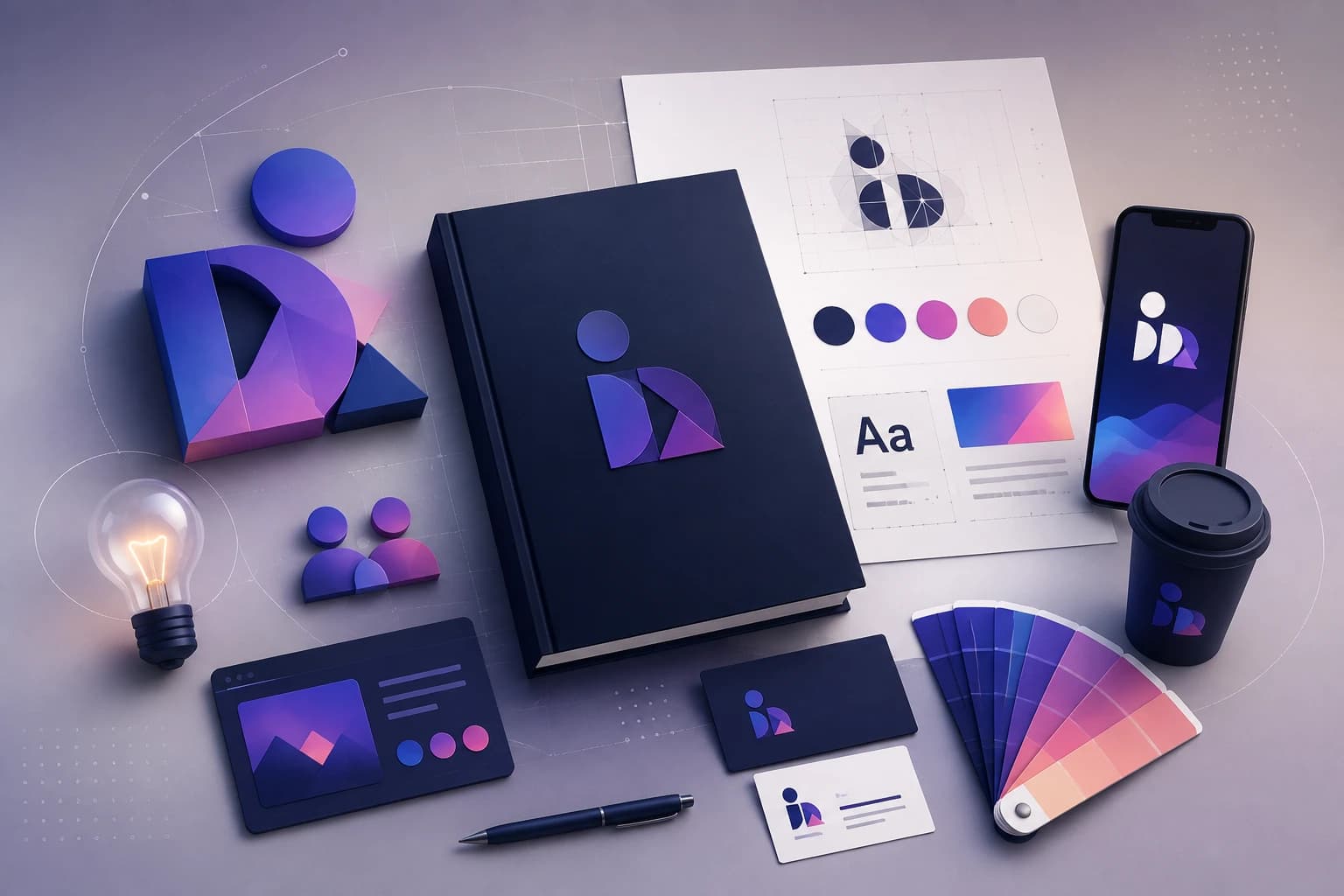
Whether you are a startup, an SME or an established company, knowing how to create a visual identity helps you differentiate yourself from competitors and strengthen your presence in the market.
02What Is a Visual Identity?
A visual identity is the complete set of graphic elements that identify a brand and distinguish it from others. It visually communicates a company's values, personality and positioning.
A professional visual identity generally includes several elements: the logo, color palette, typography, graphic elements, imagery and brand usage rules.
The goal is to create a consistent brand image so the company is immediately recognizable across its website, social media, sales documents and advertising materials.
03Why Create a Visual Identity for Your Business?
A well-designed visual identity directly contributes to a company's credibility. When customers encounter the same visual codes across different touchpoints, they can identify the brand more easily and gradually develop trust.
A consistent brand identity can notably:
- strengthen brand awareness
- improve brand recognition
- communicate the company's values
- differentiate the business from competitors
- professionalize its digital communication
- create a consistent brand experience
- strengthen trust among customers and prospects
Visual Identity as a Branding Tool
An effective visual identity should therefore be designed as a genuine branding tool rather than simply an aesthetic element.
04How to Create a Visual Identity Step by Step
1. Define the Brand Identity and Positioning
Before working on the design, it is essential to clearly define the company's identity. What are its goals? Who is its target audience? What are its values? What image does it want to communicate?
This first step helps define the brand positioning, target audience, brand personality and brand universe.
A company seeking to communicate a premium image will not necessarily use the same visual codes as a young, creative and dynamic brand.
2. Define the Brand Values and Personality
Graphic elements should be consistent with the company's values. Define a few attributes that characterize the brand: modern, innovative, elegant, accessible, dynamic, authentic or professional.
This process helps build a coherent brand platform and makes subsequent visual decisions easier.
3. Choose a Color Palette
The color palette is a central element of any visual identity. Colors should be selected according to the industry, target audience and emotion the brand wants to communicate.
Good brand guidelines generally define a primary color, secondary colors and, where appropriate, accent colors.
The goal is not to multiply colors, but to create a visual system that is easy to recognize and adaptable across different media.
4. Select the Typography
Brand typography also contributes to a company's visual personality. Font choices should balance aesthetics, readability and consistency.
It is generally preferable to limit the number of typefaces used to maintain clear communication. Rules for headings, subheadings, body text and graphic elements can then be incorporated into the brand guidelines.
5. Design a Professional Logo
The logo is often the most visible element of a visual identity. It should be simple, memorable and easy to recognize.
A good logo design should also work across different media and formats: websites, social media, business cards, sales documents, advertising or packaging.
However, the logo should not be considered the entire visual identity. It is one component of a broader graphic system.
6. Develop a Consistent Visual Universe
After defining the logo, colors and typography, the other elements that make up the brand's visual universe should be established.
These can include shapes, icons, illustrations, photography, patterns, pictograms and graphic styles. Together, they should create genuine consistency across different media.
This consistency is particularly important for digital communication, where a brand is present across several platforms at the same time.
05Create Brand Guidelines to Ensure Consistency
The brand guidelines are the reference document that brings together the rules for using the visual identity.
They can present the logo and its different variations, colors and their references, typography, layout rules, photographic style and the main graphic elements.
Brand guidelines allow everyone working on the company's communication to follow the same rules and maintain visual consistency.
A strong visual identity becomes truly effective when it remains consistent across every communication channel.
— RKTEC Solution
They become particularly useful when a company works with several graphic designers, agencies, community managers or marketing teams.
06What Media Should You Use for Your Visual Identity?
A visual identity should be easily adaptable to every customer touchpoint. It can notably be used across:
- the website
- social media
- business cards
- brochures and flyers
- sales presentations
- advertising campaigns
- newsletters
- professional documents
- packaging and printed materials
Ensure Consistency Across Digital Branding
Digital branding should ensure continuity between the website, social media and the various online communication channels.
07What Mistakes Should You Avoid When Creating a Visual Identity?
Creating a visual identity based solely on trends can be a mistake. A graphic trend can quickly become outdated, while a well-designed identity should remain relevant over time.
You should also avoid using too many colors, typefaces or graphic elements. An effective visual identity generally relies on simplicity, consistency and recognition.
Finally, design should always be guided by the communication strategy and target audience. An attractive identity that is inconsistent with the company's positioning may communicate the wrong message.
08Visual Identity vs Brand Strategy: What's the Difference?
Brand strategy defines the positioning, values, target audience and how a company wants to be perceived.
Visual identity translates that strategy into graphic form. It transforms the brand's positioning into easily recognizable visual elements.
The two approaches complement each other: a successful visual identity should result from strategic thinking, not simply graphic design work.
09Why Work With an Agency to Create Your Visual Identity?
Creating a professional visual identity requires both strategic and creative thinking. A specialized agency can analyze the company's positioning, market and competitors to develop an identity aligned with its objectives.
Support can cover the creation of a professional logo, brand guidelines, the choice of colors and typography, and the rollout of the identity across different communication channels.
This approach helps build a consistent, recognizable brand image that supports the company's growth.
10Create a Strong Visual Identity With RKTEC Solution
Would you like to know how to create a visual identity that truly reflects your business and differentiates you from competitors? RKTEC Solution supports you with your branding strategy, digital communication and the creation of a consistent and professional brand identity.
From strategic thinking to the creation of graphic elements, our team helps you build a brand image tailored to your objectives and audience.
Contact RKTEC Solution today and give your business a strong, professional and memorable visual identity.
11FAQ – How to Create a Visual Identity?
What Is a Visual Identity?
A visual identity includes all the graphic elements that make a company recognizable: logo, colors, typography, shapes, images and other graphic elements. It helps build a consistent brand image that is easy to identify.
Why Is Visual Identity Important for a Business?
A visual identity helps strengthen brand awareness, professionalize communication and differentiate the company from competitors. A consistent identity also makes brand recognition easier across different communication channels.
What Is the Difference Between a Logo and a Visual Identity?
The logo is only one element of the visual identity. Visual identity also includes colors, typography, graphic elements, photographic style and the rules governing how all these elements are used.
What Are Brand Guidelines?
Brand guidelines are a document that defines the rules for using a visual identity. They specify logo versions, colors, typography, graphic elements and presentation rules to ensure visual consistency.
How Much Does It Cost to Create a Visual Identity?
The cost of creating a visual identity depends on several factors: the company's needs, level of customization, logo creation, brand guidelines and the number of materials to design. A custom identity generally requires an initial analysis to prepare an appropriate quote.